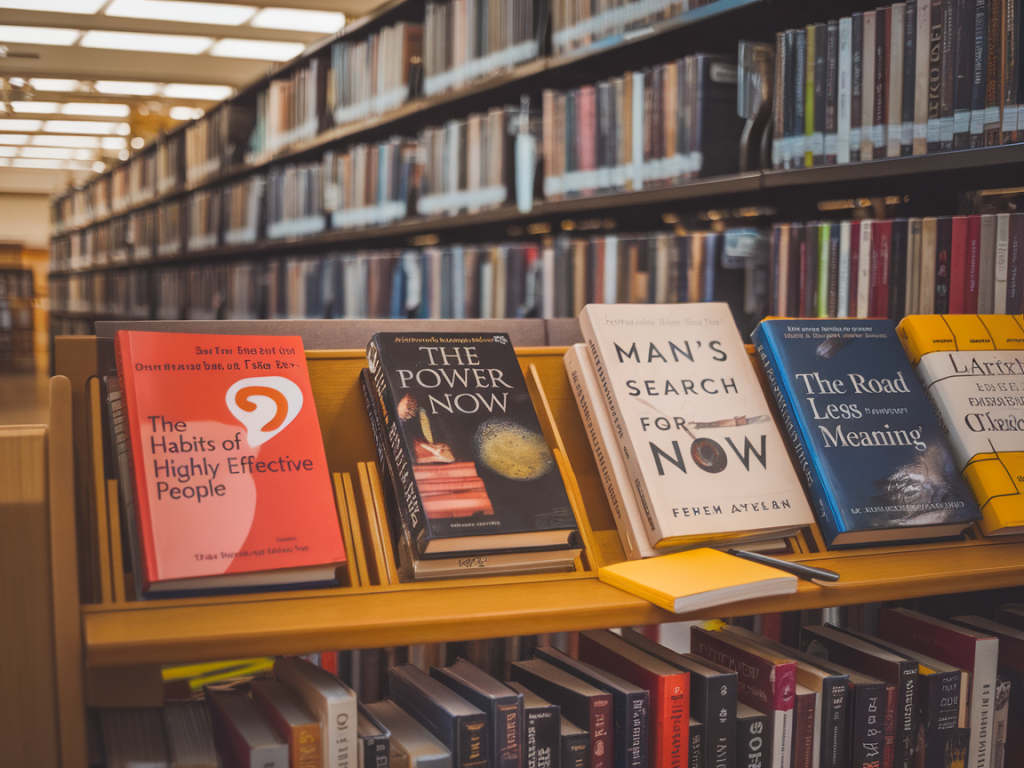
I have a confession: I own more self-help books than I can reasonably justify. They’re on my nightstand, in my bag, and sometimes piled in the kitchen because I like the cover. Over time I got better at one thing—deciding whether a book is worth my time before I’ve read more than a few paragraphs. Because time is finite and so is my attention, I developed a quick, ruthless checklist I use on page one. It’s not infallible, but it saves me dozens of hours and dozens of disappointing reads. If you want to judge a self-help book without committing to it, here’s how I do it, in the first person and with the small nitpicky details that actually matter.
Read the subtitle and opening paragraph like a contract
The subtitle is where authors either promise a specific outcome or hide behind a vague feel-good phrase. If the subtitle says How to stop procrastinating in 7 days or A proven system for better sleep, that’s a clear, testable promise. If it says Inspiration for a better life, treat it like advertising copy—pleasant but possibly fluff.
On page one I ask myself: does this sound like a promise or an aspiration? Promises require mechanisms, evidence, and a clear path. Aspirations need fewer specifics. Neither is inherently bad, but I prefer books that can show, early on, how they intend to deliver.
Scan the table of contents like a map
Before I go further I flip to the table of contents. This tells me whether the book has a structure I can follow or whether it’s a series of loosely connected pep talks.
- If the chapters are practical and sequential—“Assess, Plan, Execute”—that’s a good sign.
- If every chapter reads like a one-off: “Be Brave”, “Forgive”, “No More Overthinking”, I check for repetition or lack of coherent method.
- I also look for an appendix, bibliography, or workbook sections; their presence suggests the author cares about application and sources.
Check the author’s pitch and credentials
On page one, authors often give a quick line about who they are and why they wrote the book. I treat this like a credentials check.
I look for: relevant lived experience, professional training, or a long track record of tested work. A wellness influencer with a huge following is not the same as a clinical psychologist or a researcher. Neither is disqualifying—just informative. The key question I ask is: Why this person, and why now?
Look for a mechanism early
A mechanism is the how: a habit, an exercise, a cognitive trick, a framework. The worst self-help books promise transformation but never explain how it actually happens. The best ones give me a practical lever I can pull.
On the first page I try to spot whether the book hints at a repeatable method. Is there an acronym? A daily practice? A diagnostic test? If a book’s opening is all motivation and no method, I decide whether I want a pep talk or a guide; if I want practical change, I keep looking for the mechanism.
Assess the tone: compassionate coach, guru, or salesperson?
Tone matters. I respond differently to a calm, curious voice than to one that’s loud and certain. On page one I listen for the author’s attitude toward the reader.
- Compassionate coach: realistic, acknowledges setbacks, offers small steps. I usually keep these.
- Guru: charismatic, sweeping claims, often anecdote-heavy. I’m cautious but sometimes intrigued.
- Salesperson: hyperbolic, frequently referring to “you must do this now.” I close the book fast.
Watch for scientific literacy and honesty
I’m not a scientist, but I can spot sloppy claims. On page one, any reference to “science” or “research” that looks precise is a good sign. Vague appeals to “studies show” with no hint of what or who did the study is a red flag.
Good indicators: mentions of study type (randomized trial, meta-analysis), named researchers or labs, or at least a promise to include citations later. Poor indicators: blanket statements like “research proves” without follow-up.
Do a quick scan for specificity and examples
Specific beats general every time. If the opening is full of concrete examples, small details, and actual scenarios that feel familiar, the author probably knows the territory. If the text stays in motivational generalities—“Choose to be happier”—I doubt its practical usefulness.
Check for workbook elements and transferability
Does the author ask you to do something immediately? Even a tiny exercise on page one—a prompt, a breathing test, a short diagnostic—signals a bias toward application. I prefer books that make me try a tiny thing at the start. It’s an easy test of whether the ideas can transfer from page to life.
Look for editorial signals: publisher, blurbs, and production
Who published the book? A reputable press doesn’t guarantee quality, but it often implies editorial rigor. Similarly, endorsements from recognized experts (not just celebrities) matter.
I also notice layout cues: clear chapter titles, an index, and well-edited prose. Typos and sloppy structure don’t doom a book, but they lower my expectations.
Use a simple decision table (my quick heuristic)
| Signal | Keep? |
|---|---|
| Specific promise or mechanism in subtitle/opening | Yes |
| Vague motivational language only | Maybe (if I want inspiration) |
| Credible author background or evidence of expertise | Yes |
| Grandiose, guaranteed claims | No |
| Immediate exercise or practical prompt | Yes |
Try a five-minute experiment
If the book survives the page-one audit, I give it five minutes. I read the first chapter or do the first exercise. That’s often enough to tell me whether the author has follow-through. If the first exercise is actionable and helpful, I read on. If it’s manipulative, tedious, or weirdly abstract, I stop.
Be honest about what you want
Your goals shape whether a book is useful. I used to buy habit books because I admired the covers, but I really needed therapy-level work. Now I ask myself: do I want a quick tool, a worldview shift, or deep transformation? A few lines on page one usually reveal the book’s ambition—and whether it matches mine.
Borrow, sample, or skim before buying
My final trick: use libraries, previews on Google Books, or Audible samples. In the era of subscriptions and samples, there’s no reason to commit sight-unseen. I’ll listen to the intro on Audible, skim a chapter, and check the references. If those first pages sing to me, I buy. If not, I move on.
Page one is a small investment of attention that pays off. In the messy business of trying to be better, knowing when to stop is as useful as knowing when to persist—and often easier to learn. If you want, I can share the checklist as a printable one-pager or walk you through a recent example (I’ll admit: I judged a viral title on page one and it failed spectacularly). Which would be more helpful?