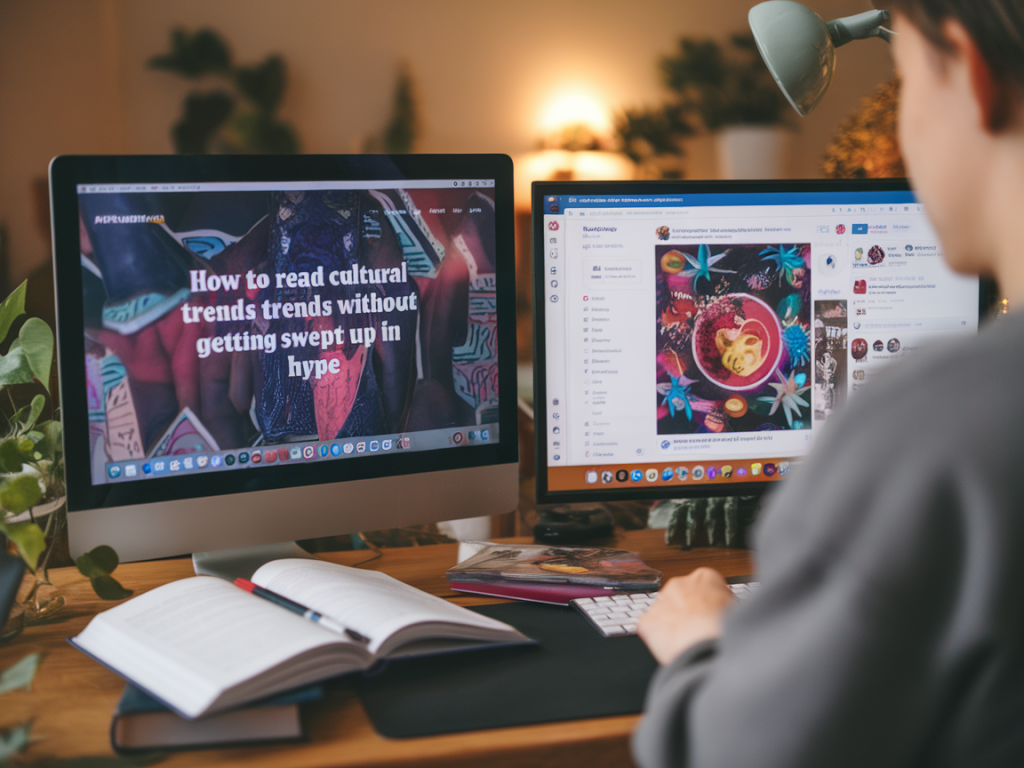
I remember the first time I bought into a trend so completely that I spent a small fortune on a gadget I used twice. It wasn’t a disaster — more of a curiosity: why did I feel so compelled to join the wave? Since then I’ve tried to get better at reading cultural trends without letting the excitement, the FOMO, or the shiny marketing do my thinking for me. Here’s how I approach trends now — a practical, slightly skeptical toolkit that helps me take the useful parts, leave the noise, and avoid impulse-buy regret.
Why bother decoding trends?
Trends are shorthand for cultural change. They point to new values, technologies, or habits that could matter to how we live, work, and design things. But they’re also a marketplace: attention gets monetised, and simple ideas are dressed up as movements. I care about trends because they can inspire better choices — smarter products, kinder workplaces, more interesting conversations — but only if you can separate signal from hype.
Start with curiosity, not judgment
When I see a trend — whether it’s a new wellness ritual, an app that promises life transformation, or a resurgence of an old fashion silhouette — I try to keep two instincts in balance: curiosity and skepticism. Curiosity asks, “What need or feeling is this trend responding to?” Skepticism asks, “Who benefits if I adopt this?”
Asking both questions keeps me from being dismissive (which blocks learning) and from uncritically joining the chorus (which leads to wasted time and money).
Ask the three practical questions
I use a small checklist before committing: utility, durability, and cost — and I apply them to both products and cultural ideas.
These questions don’t give a binary answer, but they reduce the emotional pull of “everyone else is doing it” and keep decision-making grounded.
Look for the root — not the packaging
Marketing loves packaging. The same human impulse — a desire for calm, status, simplicity, hustle — can be packaged as different trends across categories. When I see a wave of similar products or ideas, I try to identify the root desire behind them. Is it convenience? Security? A need for connection after years of isolation? Once you name the root, you can evaluate potential responses that are more useful or affordable.
For example, if a bunch of new sleep gadgets hit the market, the root might be chronic poor sleep. The solution could be a mattress or a midnight gadget — or it could be revisiting evening screen habits, caffeine timing, or room ventilation. Trends can be inspiration, not prescription.
Signal versus substance: the social calculus
Trends often function as social signals — a way to indicate identity, values, or status. That’s fine if you’re consciously using a trend to communicate, but it becomes costly when signaling replaces substance.
I try to separate performative adoption from meaningful change. If a trend helps me better align my actions with values I already hold, great. If it’s mostly to appear on-message to a particular crowd, I weigh whether that appearance is worth the trade-offs.
Test small, iterate fast
I’m a fan of small experiments. Instead of fully committing, I try a low-cost, short-term version of the trend. If it’s a new productivity method, I test it for two weeks. If it’s a wellness supplement, I try a single month while tracking simple metrics: mood, sleep, energy. If it’s a fashion trend, I borrow or buy secondhand first.
Small tests reduce regret and teach you whether the trend fits your life. They also reveal practical annoyances marketing glosses over.
Pay attention to who’s benefiting
This is a personal favorite because it reveals incentives. When a trend is backed by venture capital, heavy influencer marketing, or companies that profit from frequent repurchases, that doesn’t mean it’s bad — but it does mean you should interrogate claims more closely. Products designed to create repeated purchases (skin-boosting serums, subscription services) will always have an incentive to make you feel incomplete without them.
Ask: who is gaining if I adopt this? Sometimes answers are obvious; sometimes they’re subtle. Either way, incentive awareness is a useful filter.
Use history as a gentle anchor
Trends rarely emerge from nowhere. They sit on top of economic, technological, and social shifts. I like to look for precedents — not to be cynical but to gain perspective. Tastes swing, but underlying patterns (urbanisation, digitisation, ageing populations, climate anxiety) persist. If a trend maps onto an enduring structural change, it probably has more staying power.
Keep a “trend notebook”
I keep a small, searchable note of trends I notice: headline, why it matters, who benefits, and a tiny test I tried (or want to try). Over time the notebook becomes a map of what actually stuck and what fizzled. It’s a personal way of building pattern recognition without getting swept up in each new headline.
Embrace the parts you like, politely decline the rest
One useful mental shift is to treat trends like a buffet. You don’t need the whole menu. You can pick a practice, a product, or a phrase that improves your life and leave the rest. I’ll happily adopt a morning habit that improves my focus, ignore the brand drama, and not buy the merch.
When to join in publicly
Sometimes joining a trend signals solidarity or opens doors — being early to a new community can be creatively rewarding. I’ll join conversations when the trend aligns with my values, when I can add something useful, and when I’m comfortable with the trade-offs. Otherwise, I keep my curiosity private and my spending intentional.
Tools and habits that help
Reading cultural trends well isn’t about being immune to excitement — it’s about choosing which excitements are worth following. With a few practical filters, a little experimentation, and a dose of incentive-awareness, you can let trends inform your choices without letting them make your decisions for you.