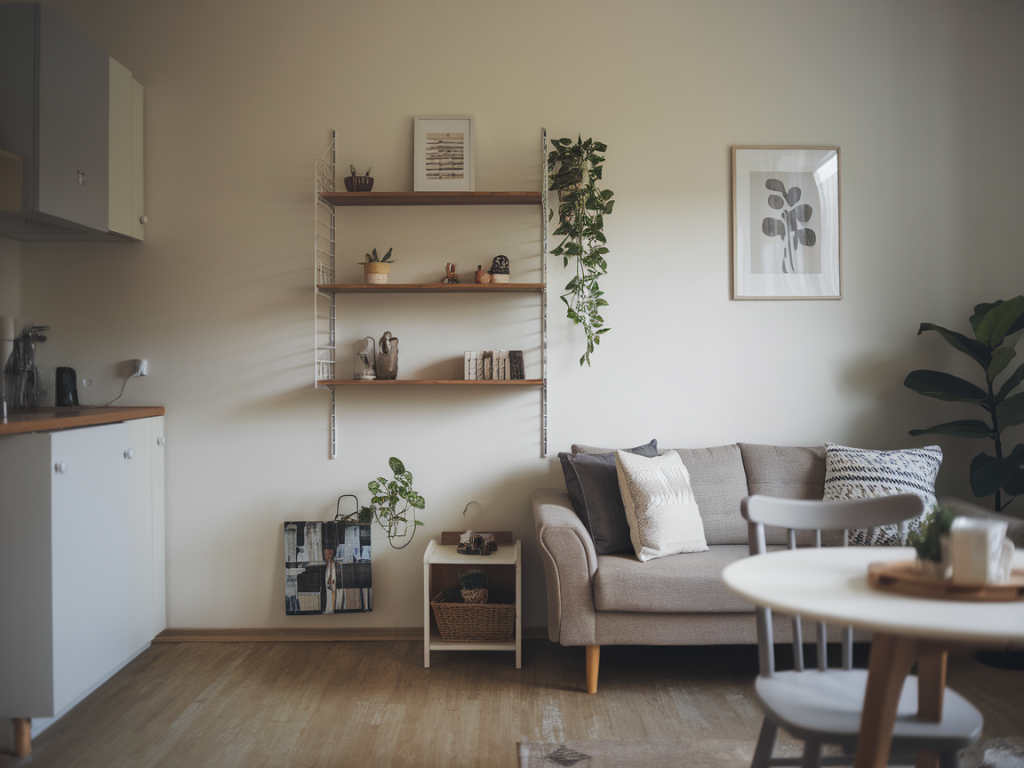
I live in a small apartment — the kind where the kitchen, living room and bedroom politely overlap, and every piece of furniture has to earn its keep. Over the years I’ve tried a lot of tricks to make the place feel calmer and more usable: some worked beautifully, some failed spectacularly (hello, foldaway treadmill). Below are the practical steps I still use. They’re simple, low-cost where possible, and focused on making small spaces feel twice as calm and twice as functional.
Start with a ruthless edit
When space is limited, the first and most effective move is to reduce the number of things competing for attention. I do a seasonal edit every three months: I touch every shelf, drawer and surface and ask three quick questions about each item — do I use this? Do I love it? Does it earn its space? If the answer is no to two of the three, it goes.
This isn’t about minimalism as a style; it’s about intentionality. Donate, sell, or put items in a labelled box that goes into storage for 30 days. If you don’t miss them, you’ve freed up real estate and mental energy.
Designate clear zones — even if they overlap
In small apartments zones are more mental than physical. I label areas in my head: work, rest, cook, and tidy. The trick is to create visual cues that tell your brain which mode you're in.
Useful cues include:
Invest in dual-purpose furniture
Dual-purpose pieces are the most efficient use of square footage. Here are the ones that have paid off for me:
When buying, prioritize quality of joints and hardware — a clever mechanism is useless if it breaks after a few months.
Think vertically
Walls are an underused resource. Moving storage up frees floor space and creates a less cluttered visual field.
Use labelled baskets and boxes to keep high shelves tidy and to avoid the “mountaintop of mismatched stuff” effect.
Optimize your storage with a system
Clutter returns unless you have a repeatable system. I use a simple zone-based system with visible containers for daily items and opaque boxes for seasonal things.
Clear containers or labelled fabric bins make it easy to find things quickly; this reduces the urge to leave items out.
Make lighting your small-space superpower
Good lighting does more to make a place feel spacious and calm than a fresh coat of paint. I layer light: ambient, task and accent.
Smart bulbs (like Philips Hue) are a small splurge that pays off — different colour temperatures for morning focus and evening relaxation shift the mood instantly.
Choose calm colours and textures
A restrained palette helps a small space feel larger and more cohesive. I don’t limit myself to white — I pick two neutrals and one accent colour.
Control micro-clutter with daily small rituals
Big clean-ups are demoralising. I rely on micro-routines that take 5–10 minutes and keep the place stable.
Rituals beat willpower. Put the tasks in your calendar if you need to.
Designate a charging and cable hub
Cables and chargers are the invisible mess that makes places feel chaotic. I have one small tray near an outlet that holds the essentials: phone, headphones, watch charger. Everything else gets unplugged and stored in a labelled box.
Simple tricks: use a multi-port USB hub (Anker makes compact ones), cable clips, and a small power strip with surge protection tucked behind furniture.
Let plants and scent do the emotional work
Plants make small spaces feel alive and calming without taking up too much functional space — a trailing pothos on a high shelf, a small snake plant by the bed. A simple reed diffuser or a lavender sachet in a drawer gives an immediate sense of care and calm.
Don’t over-commit: choose low-maintenance plants and rotate them around the apartment so they don’t become another chore.
When to splurge (and when to save)
In small spaces, certain investments multiply their value:
Save on trendy decor and cheap open shelving that sags; spend on the basics that make daily life smoother.
Every apartment is different, and the best solutions are the ones that fit your routine and tastes. The goal isn’t to make a magazine-perfect flat — it’s to create a small home that feels roomy in the ways that matter: visually calm, practically organised, and emotionally restorative.